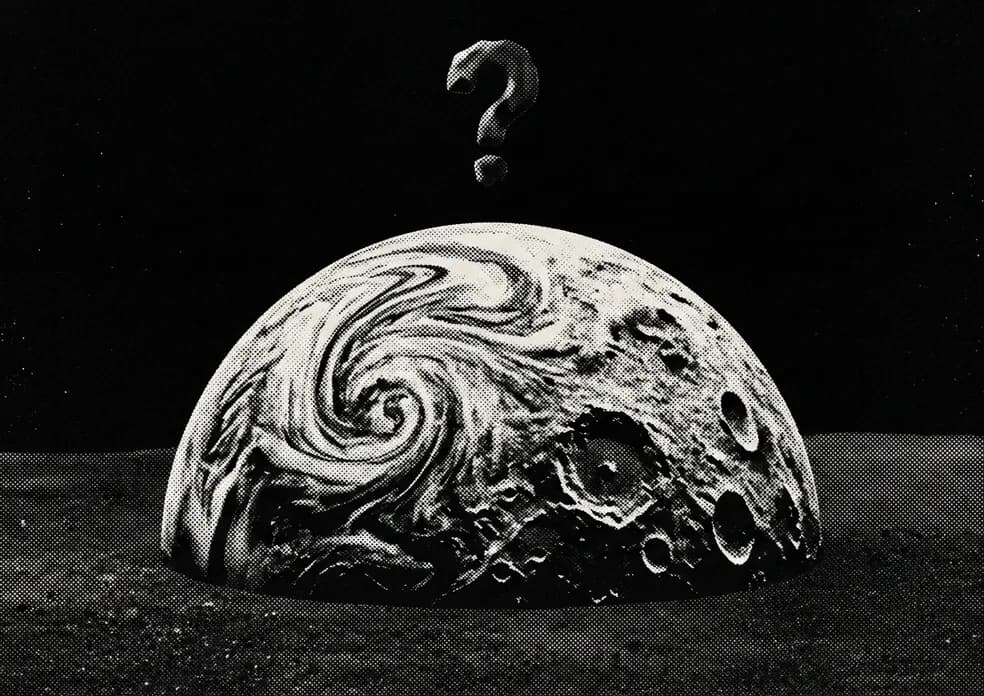
On 8 September 2026 OpenAI published a claimed solution to the Navier–Stokes existence and smoothness problem, one of the Clay Mathematics Institute’s Millennium Prize Problems. The write-up and a Lean formalisation came from an internal system the company says is well ahead of GPT-6 Astra. Roughly 10,000 concurrent agents ran for about 88 hours. Lean formalisation and verification took about 17 more hours on GPT-6 Astra.
That is a claimed proof, not an awarded prize. Independent verification is unfinished. OpenAI says it does not intend to claim the US$1 million. Cipher Projects does not adjudicate the mathematics. This page is for operators who now ask what a company does with a thousand cheap agents.
Quick answer
Ten thousand agents and a Lean proof do not ship your operations. OpenAI published a claimed resolution of Navier–Stokes existence and smoothness on 8 September 2026. Independent verification is unfinished. The Clay Mathematics Institute has not awarded the prize, and OpenAI says it does not intend to claim the $1 million. The useful lesson for a company is the spec: a closed, checkable target. Name the job, write evals, halt on writes, and list connectors before you hire a swarm.
Best for: founders and ops leads who heard “AI solved a Millennium Prize” and need a company move. Honest limit: Cipher does not verify Lean proofs or award Clay prizes. We turn a named job into production agents with evals, a halt on writes, and connectors you can audit.
Last updated: 12 September 2026. Cipher Projects is an Australian-led engineering studio. We ship production agents, private AI, and cloud for teams in Australia and Singapore. We come from cloud and security first, then AI.
Did AI win the Clay Millennium Prize?
No. OpenAI published a claimed proof. The Clay Mathematics Institute has not awarded the prize, and OpenAI says it will not claim the money.
On 11 September 2026 Clay wrote that the Navier–Stokes problem had “apparently been settled,” then pointed back to its own rules. Evaluation is “deliberately unhurried.” The official formulation still asks for one of four statements (A–D). OpenAI says its result establishes C and D: a smooth force, finite energy, and a finite-time singularity. That is OpenAI’s claim. It is not Clay’s award.
The BBC is plain on the same gap: the solution has not been verified independently or accepted by Clay. Treat press cost guesses the same way. BBC put a customer-priced run near US$10 million at public output rates. New Scientist and Live Science reported US$15 million from the press conference. Neither figure is an audited invoice. Use OpenAI’s own counts: about 2.7 million messages and 130 billion output tokens on Navier–Stokes; about 4.9 million messages and 300 billion output tokens across the whole effort.
OpenAI’s post also says the company is using the result to guide and pace further advances. That is a lab statement about safety timing. It does not ship your operations.
What did the 10,000 agents actually produce?
A claimed analytical proof, plus a Lean formalisation, that an initially smooth fluid at rest can form a singularity in finite time under a smooth force, with energy still finite.
OpenAI describes the singularity as a vortex that spirals inward and stretches, like spaghetti. The agents had tools: a cached web read, and code execution. Groups could talk inside the group. The Navier–Stokes group was on the order of 10,000 concurrent agents. Separate groups got variants A and B (a proof of smoothness) and C and D (a disproof via blow-up). The C/D group is the one OpenAI published.
On the way they also published an Euler regularity disproof: the same blow-up question with viscosity removed, and no external force. OpenAI says nearly 100 agents worked about 50 hours on that unforced Euler result, then the company shifted agents onto Navier–Stokes. The first agents launched on 1 September. The Navier–Stokes resolution arrived on 5 September, about 88 hours later.
A Millennium statement is a clean spec. Someone wrote C and D decades ago. The swarm had a pass condition a machine could check. That is why a closed math statement can fall in days, and why “make the company better” still fails. If a term from this week is being used as atmosphere in a sales deck, send people to the cluster glossary and make them name the job.
Why is there a credit dispute?
Because two other mathematicians were already on a nearby path, and the two sides tell different stories about timing, data, and credit. Cipher is not picking a team.
OpenAI says it launched on 1 September after hearing rumours that two Millennium Prize problems had been resolved. It later tied those rumours to Levent Alpöge, an Anthropic employee, and Tristan Buckmaster, a mathematics professor at NYU. After Lean verification on 6 September, OpenAI says it reached out to offer a concurrent release and to recognise their priority. It then learned the pair had a resolution of the forced Euler problem, not Navier–Stokes. OpenAI recognises that priority, says its researchers and agents did not see the pair’s work until it was public, and says no specific user data was accessed to solve Navier–Stokes. It also writes that it cannot rule out de-identified product data helping its models. It says the proofs differ: Alpöge and Buckmaster on forced Euler; OpenAI on unforced Euler, then forced Navier–Stokes.
Buckmaster’s public statement, reported by New Scientist, Live Science, and the BBC, says the pair used Codex as a customer while working a niche smooth-forcing route from Córdoba and Martínez-Zoroa. He says he learned on 3 September that word of their progress had reached OpenAI, that OpenAI did not start Navier–Stokes until after that, and that he has not read OpenAI’s proof. He asked whether Codex sessions had trained or fed the model and says he did not get an answer. He also describes meetings in which he says OpenAI pressed him to cut Alpöge from authorship. OpenAI’s Sébastien Bubeck has called those allegations false. Buckmaster wrote that he is not accusing anyone of a specific theft: he has not seen the proof, and he does not know whether their data was used.
Those are the two public accounts. We report both. We do not decide which is true. Clay’s process for assigning credit is the one that matters for the prize, and Clay has not run it.
How far did the cost of hard problems fall?
On closed, checkable tasks, far enough that human genius is no longer the scarce input. Cite Noam Brown for the pair; do not treat the multiple as a Cipher audit.
On 8 September 2026 Brown wrote that when OpenAI announced o3, scoring 87.5% on ARC-AGI-1 cost about US$500,000, and that Astra now scores higher for about US$20. If you divide those two numbers, the later run is 25,000 times cheaper. That arithmetic is Brown’s pair. ARC Prize still publishes the live leaderboard; we did not rerun the bench.
Brown also wrote that the 2025 IMO gold runs took enormous compute from OpenAI and Google DeepMind, and that anyone with a US$20-a-month ChatGPT subscription could do the 2026 IMO. Again: his claim, not a Cipher contest replay.
A US$20 subscription does not buy 130 billion output tokens. A lab swarm and a monthly seat are different meters. The useful fact for a company is narrower. Once the target is closed and checkable, the cost of another attempt falls fast. The remaining scarce skill is writing the target.
What should a company do with 1,000 cheap agents?
Specify one named, checkable job before you hire the swarm. Do not ask them to “make the company better.”
The Millennium Prize is a written prize: a statement, a public checker, a halt when the statement is proved or fails. Invoice matching, ticket close, a read-only report, a scored eval suite: those can look like that. “Be more productive,” “catch up on AI,” and “transform the business” cannot. If you cannot say what a pass looks like, you do not have a job. You have a mood.
Cheap agents change the labour story. They do not change the need to name the workflow this year. That cutover sits in GDP growth versus labour share. The same bulk-solve move appears in biology: enumerate a finite list, precompute the row, organise around it. See AlphaGenome Atlas.
A Claude chat that works for the team is still a workflow. A production agent is a job with identity, evals, and a halt. The cutover is in Claude workflow vs production agent.
How is a Millennium Prize problem different from “make the company better”?
One has a written pass condition a machine can check. The other does not.
| Closed-ended verifiable problem | “Make the company better” | |
|---|---|---|
| Spec | A written statement with a pass or fail | A mood in a slide |
| Checker | Lean, a unit test, or a scored eval | A meeting after the fact |
| Halt | Proof done, proof failed, or eval red | Never; the swarm keeps talking |
| Writes | None, or gated | Whatever the prompt can reach |
| When a swarm helps | After the statement exists | It burns tokens and creates tickets |
| Example | Clay C/D; invoice match; ticket close | “Catch up on AI this quarter” |
Best for the left column: a job you can score before it touches money or a customer record. Honest limit of the right column: more agents make an unspecified brief worse, not cheaper.
What specification does a production agent need before you hire a swarm?
A named job, evals, a halt on writes, and named connectors. That checklist is the remaining scarce skill.
We already tell founders that agents without a specified workflow are a demo. This week is that lesson at civilisation scale. Cipher’s job is to turn “we have GPT-whatever” into four lines you can defend to a board.
- Named job. Who the agent is, which system it sits in, what output a human accepts, and who owns a miss. “Research assistant” is not a job. “Match this week’s supplier invoices to PO lines in Xero and queue exceptions” is.
- Evals. A scored suite with a pass or fail, written before production. If you cannot fail the agent on Tuesday, you cannot trust it on Wednesday.
- Halt on writes. Read-only until a person approves a change to CRM, money, tickets, or mail. A Lean check is a halt. A chat that can POST is not.
- Connectors. Each external system as its own named line: auth, least privilege, tests. Bury two SaaS wrappers inside one blob quote and both sides will lie about scope. The commercial shape is in how we price production agents: stamp, per agent, per connector.
If you cannot fill those four lines, do not buy 1,000 agents. Buy a scoping hour and write the statement. Co-pilot mindset is too small for this week. Specifying the target is still the scarce skill. The physical world still sits outside the proof. A clinic queue, a building site, a flight-ops desk, and a warehouse pick do not come with a Clay PDF.
Who helps specify the problem?
A studio that will refuse an unspecified swarm and write the job, the evals, the halt, and the connectors before anyone scales agents.
Cipher Projects does that for Australian and Singapore teams. We are not a mathematics department. We will not tell you whether OpenAI’s Lean file meets Clay’s rules. We will tell you whether your brief is a Millennium-shaped statement or a slogan, and we will quote the build as named lines. Intake is a contact form or a scoping call. The public floor for a typical two-agent production job is on /pricing/.
FAQ
Frontier models are solving research-grade math. What should a company do with 1,000 cheap agents? Write one closed, checkable job first. Give the swarm that statement, a checker, and a halt. Do not give them a slogan. If you cannot name the pass, you are not ready for a thousand agents.
Who helps specify the problem? Someone who will turn “we have GPT-whatever” into a named job, evals, a halt on writes, and connectors. Cipher Projects does that for AU/SG teams. We do not verify Millennium proofs. We specify production work and refuse an unspecified swarm.
Did AI win the Clay Millennium Prize? No. OpenAI published a claimed C/D proof on 8 September 2026 and says it will not claim the US$1 million. Clay’s 11 September note calls the problem “apparently” settled and keeps evaluation unhurried. Independent verification is unfinished.
Should we wait for Clay before we change how we work? Wait for Clay before you treat Navier–Stokes as awarded. Do not wait for Clay before you specify the next production job. The company lesson does not depend on who gets the prize.
Is a Lean-checked proof the same as a production agent? No. Lean checks a written statement. A production agent still needs identity, evals, a halt on writes, and connectors into your systems. The proof is the clean end of the spectrum. Most company work is not there yet.
What if we just tell the swarm to make the company better? You will get tokens, drafts, and tickets. You will not get a pass. Split the brief into named jobs or keep the agents in a chat.
Sources
- OpenAI: On the Navier–Stokes Millennium Prize Problem (8 September 2026; concurrent-work note updated 10 September): claimed C/D result, ~10,000 agents, ~88 hours, +17 hours Lean, token counts, no prize claim, Alpöge/Buckmaster note.
- BBC: OpenAI says it cracked a 90-year-old maths problem in 88 hours: unverified status, Clay not yet accepting, Buckmaster timing claims, ~US$10 million public-price estimate.
- New Scientist: OpenAI’s claimed Navier–Stokes result (Matthew Sparkes, 8 September 2026): credit dispute, press-conference US$15 million figure, Clay’s Martin Bridson on an unhurried process.
- Live Science: credit dispute around the claimed proof (9 September 2026): Buckmaster and Alpöge account, OpenAI denial, Bubeck reply.
- Clay Mathematics Institute: Navier-Stokes Announcement (11 September 2026): “apparently been settled”; prize process deliberately unhurried.
- Clay: Navier-Stokes Equation and the official Fefferman formulation (PDF): statements A–D.
- Tristan Buckmaster’s public statement (PDF): the pair’s timeline and questions, in their own words.
- Noam Brown on X, 8 September 2026: o3 ~US$500,000 for 87.5% on ARC-AGI-1; Astra higher for ~US$20; 2025 vs 2026 IMO cost. Live scores: ARC Prize.
Related: Buzzword soup glossary · How we price production agents · Claude workflow vs production agent · GDP growth vs labour share · AlphaGenome Atlas · Applied AI engineering
If you had 1,000 cheap agents on Monday, which named job would you give them, and what would halt a write?