Quick verdict
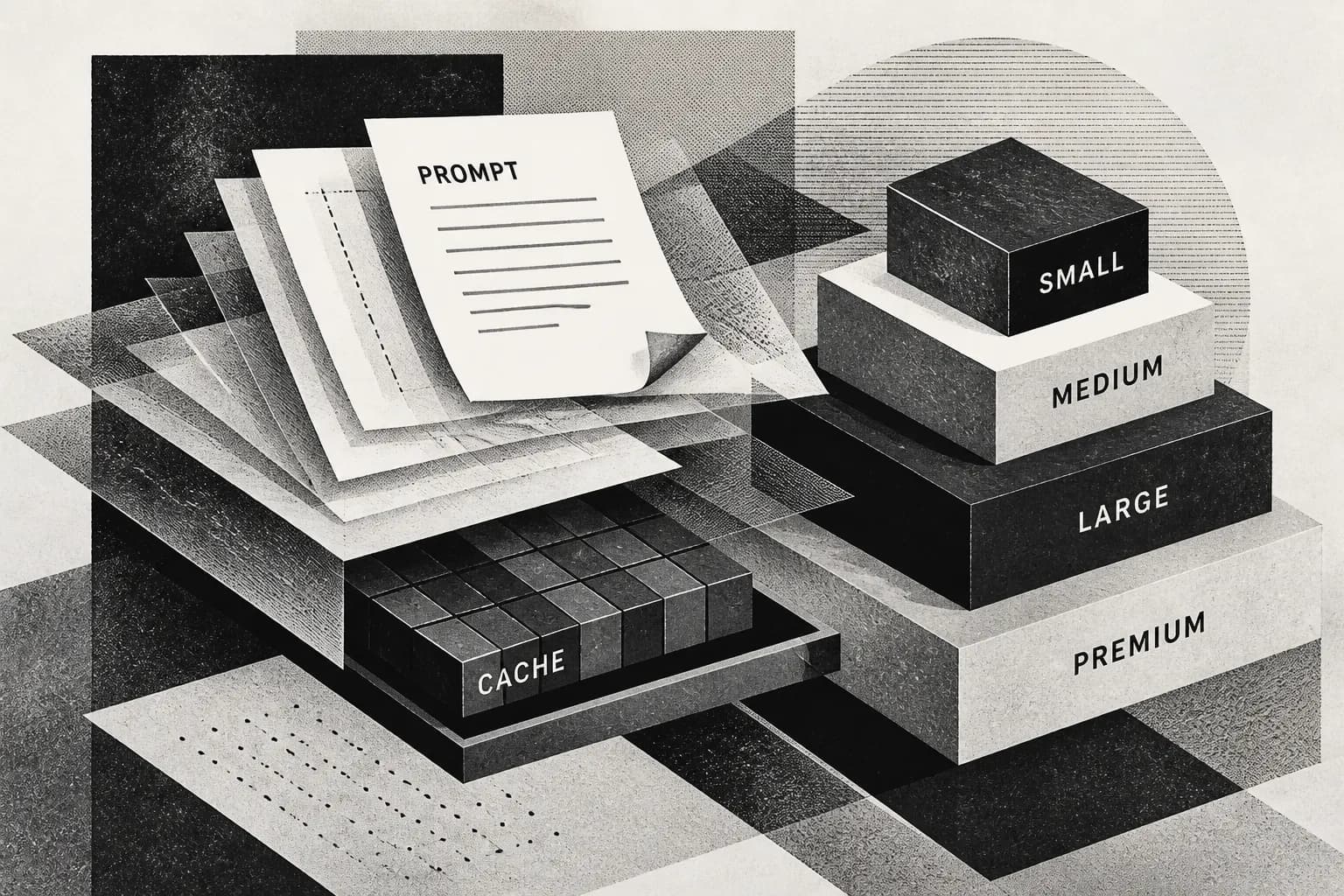
Claude API pricing is a model sticker plus a cache meter that can dominate agent stacks. If you only compare “$/1M tokens” to OpenAI, you will miss when Claude is cheaper at equal quality. The short version:
- Pick the tier for the turn: Haiku for volume, Sonnet for default agent reasoning, Opus when quality gates demand it. Do not run Opus on FAQ traffic.
- Prompt caching is the Claude-specific lever: cache hits bill at about 0.1× input; cache writes cost more than base input (~1.25× for 5-minute TTL, ~2× for 1-hour TTL — verify live). High hit rate on large stable prefixes wins hard.
- Batch API is about 50% off for offline / async jobs. Same rule as elsewhere: not for interactive chat.
- Watch Sonnet 5 intro pricing: Anthropic has published introductory Sonnet 5 rates through 31 August 2026, then a step up — budget the post-intro rate for anything that must survive past that date.
- Cipher first-hand: agent stacks with large tool schemas win hardest on Anthropic cache hits. The schema sits in the cached prefix; once hit rate is high, effective input cost drops far below sticker.
Last updated: August 2026. Rates change; re-verify Anthropic’s official pricing docs before you publish a budget externally.
Directional Claude API rates (re-verify)
Planning figures from Anthropic’s published pricing as of August 2026. Confirm at docs.anthropic.com — Pricing (or the current platform.claude.com pricing docs).
| Model | Input / 1M | Output / 1M | Notes |
|---|---|---|---|
| Claude Haiku 4.5 | ~$1 | ~$5 | High-volume classification, routing, simple extraction |
| Claude Sonnet 5 (intro) | ~$2 | ~$10 | Introductory rates through 31 Aug 2026 (verify end date) |
| Claude Sonnet 5 (post-intro) | ~$3 | ~$15 | Use this for budgets that must hold after intro pricing |
| Claude Opus (class) | ~$5 | ~$25 | Directional Opus-class sticker; confirm exact SKU on the live card |
Cache hits: about 0.1× the input rate on cached tokens. Cache writes: about 1.25× input for 5-minute cache, about 2× for 1-hour cache. Batch: about 50% off for supported async workloads. All directional — re-check the live docs for your model.
Cache hits vs cache writes (why agent schemas matter)
Anthropic’s prompt caching makes the prefix economics explicit. You pay a write premium when content enters the cache, then a deep discount on hits. That shape favors:
- Large, stable system prompts
- Large, stable tool / JSON schemas (Cipher’s strongest first-hand win)
- RAG instruction blocks that do not change every turn
It hurts you when the “prefix” churns every request (write fees, low hit rate) or when you cache short prompts that never amortize the write. Design the prompt so the stable block is contiguous and eligible; measure hit rate in production before you declare Claude “expensive” or “cheap.”
Same-workload comparison: Claude vs OpenAI GPT-4.1 (agent path)
Directional stickers only — same illustrative agent turn, before your real cache hit rate. OpenAI side uses figures from our OpenAI API pricing explained (2026) guide; always re-verify both vendors.
| Path | Input / 1M | Output / 1M | Cache note | When it tends to win |
|---|---|---|---|---|
| GPT-4.1 | ~$2 | ~$8 | Cached input often ~50–75% off (model-dependent) | Balanced agents; OpenAI tooling / Batch already standard |
| GPT-4.1 mini | ~$0.40 | ~$1.60 | Same caching family rules; verify mini cache on live card | High-volume easy turns after routing |
| Claude Sonnet 5 (intro) | ~$2 | ~$10 | Hits ~0.1× input; writes 1.25× / 2× | Equal sticker band vs 4.1 on input during intro; cache hits pull Claude ahead on large prefixes |
| Claude Sonnet 5 (post-intro) | ~$3 | ~$15 | Same cache multipliers | Needs strong cache hit rate or clear quality win to beat GPT-4.1 on pure cost |
| Claude Haiku 4.5 | ~$1 | ~$5 | Same cache multipliers | Volume paths; compare to 4.1-mini on your eval set, not on brand preference |
When Claude is cheaper at equal quality
Claude tends to win the cost comparison when (1) quality is equal on your eval set, (2) the system prompt and tool schemas are large and stable, and (3) cache hit rate stays high. At ~0.1× input on hits, a multi-thousand-token tool schema that hits most turns can beat a similar GPT-4.1 path even when base stickers look similar or slightly higher. If hit rate is poor, you pay write premiums and Claude can lose.
Worked monthly scenarios (directional)
| Scenario | Traffic shape | Dominant meters | Planning note |
|---|---|---|---|
| Internal pilot | Tens of thousands of turns; Sonnet + Haiku mix | On-demand tokens | Stay flexible on tier; instrument cache hit % early even at small volume |
| Customer agent + large tool schemas | Hundreds of thousands of turns; multi-tool agent; schema-heavy prefix | Cache hits + output tokens | Cipher’s strongest Claude win: schema in cache, high hit rate, Sonnet for hard steps / Haiku for easy |
| Offline eval + enrichment | Large batch of docs / golden-set runs; latency flexible | Batch (~50% off) | Do not burn interactive Sonnet rates on overnight jobs |
Budget tip: if your Sonnet 5 traffic will still be live after 31 August 2026, model the post-intro $3/$15 band (or whatever the live card shows) for steady-state, and treat intro pricing as temporary runway.
Choose Claude pricing levers if…
- Choose Haiku if volume is high and quality gates pass on short / structured tasks.
- Choose Sonnet if you need the default production agent brain; lock post-intro rates into any forecast past the intro window.
- Choose Opus if evals show a clear quality gap that pays for the sticker — not as a default.
- Invest in prompt caching if system prompts and tool schemas are large and stable (this is where Claude often beats equal-quality GPT paths).
- Choose Batch if the job is offline and the model is on the Batch discount list.
- Choose Bedrock-hosted Claude if AWS account ownership, IAM/VPC, or AU residency patterns prefer Bedrock over direct Anthropic API. See AWS Bedrock pricing explained (2026).
Related: OpenAI API pricing explained (2026) · AWS Bedrock pricing · Cost breakdown: running AI products · Applied AI Engineering · Pricing
FAQ
Is Claude Sonnet cheaper than GPT-4.1? On raw intro stickers, input can look similar; output and post-intro Sonnet rates often favor a careful comparison. With high cache hit rates on large tool schemas, Claude frequently wins effective input cost at equal quality. Measure on your traffic.
How do Anthropic cache hits and writes differ? Hits are deeply discounted (about 0.1× input). Writes cost a premium (about 1.25× for 5-minute TTL, about 2× for 1-hour TTL). Amortize writes with high reuse; avoid caching churning prefixes.
When should we use Claude’s Batch API? Offline jobs that can wait — evals, enrichment, backfills — at roughly 50% off. Not for interactive agents.
Should we budget Sonnet 5 at intro or post-intro rates? Use intro rates only for spend inside the published window (through 31 Aug 2026 on the figures above). Anything that must hold afterward should use post-intro (or the live card).
Who is Cipher Projects and why listen on Claude cost shape? Cipher Projects is an Australian-led AI engineering studio. On production agent stacks, we see the largest Claude savings when large tool schemas sit in the cached prefix and hit rate stays high — a cutover we validate from logs, not from sticker tables alone.
Conclusion
Claude API pricing rewards teams that design for cache hits and honest tiering: Haiku for volume, Sonnet for the agent default, Opus only when evals pay for it, Batch for offline. Compare to GPT-4.1 on the same workload with your real prefix size and hit rate — especially after Sonnet 5 intro pricing ends. For the OpenAI side of the same decision, read OpenAI API pricing explained (2026).